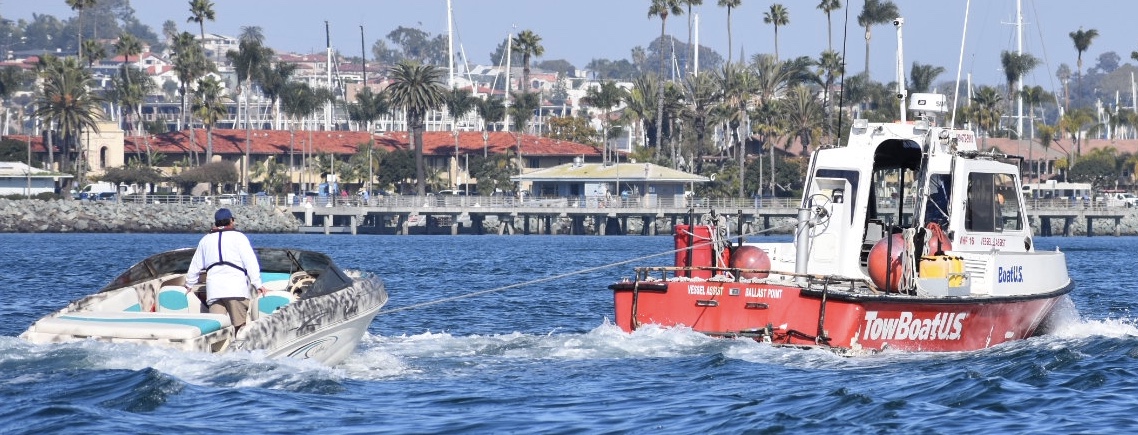
Conditions can change quickly along the San Diego coast and even in the Bay. being ready, should the unforeseen happen, is the first step in safe boating.
Before You Depart
- Float plan: Share your route and ETA with a trusted contact.
- Weather & sea state: Check wind, swell period, and visibility for your route and return window. If the weather looks questionable adjust your plan to stay close to shore or in the bays. or reschedule for a better day.
- Fuel: Follow the 1/3 rule (out / back / reserve) Don’t trust your fuel gauge. Always leave with a full tank and learn the gallons of fuel per hour your boat uses.
- Mechanical and needed components: Check your batteries for proper voltage and amperage. Check your oils, water flow, steering, throttles, running lights, registration, and all electrical components on board.
- VHF radio: Test transmit/receive and know how to properly use your radio. Monitor channel 16 while on board.
- Navigation: Update charts/apps, confirm waypoints, and carry a backup (paper or offline).
- Safety gear: PFDs for all aboard, throwable device, flares/signals, sound device, and fire extinguisher(s). An ERIRB is highly recommended.
- Bilge & leaks: Check bilge pump operation and look for unusual water in the bilge.
- Lines & anchor: Ensure anchor is ready to deploy and rode is properly secured.
On the Water
- Situational awareness: Keep a lookout for traffic, kelp lines, and changing conditions.
- Engine checks: Watch temp/pressure gauges and listen for changes in sound or vibration.
- Conserve power: If you suspect charging issues, reduce non-essential loads early.
- Know your safe harbor: Identify the nearest protected area if wind/swell builds.
- Bilge checks: Regularly check your bilges while underway.
If You Lose Power
- Stay calm and assess: Check batteries, fuel, kill switch, neutral safety switch and obvious issues.
- Get secure: If needed, deploy anchor early to avoid drifting into hazards. in kelp set your anchor to about 12′ to catch the kelp unless your close to shore.
- Make sure everyone puts on a PFD and minimize movement of crew on board.
- Get your GPS position and a general description of your location (e.g. 3 miles SW of the Point)
- Get all your info handy, name of boat length, make, POB, general idea of the problem, where you need to be towed to. We prefer your BoatUS member number and last name, But, last name and phone number associated with your membership will work. If your not a member, Click here to sign up or call 619-672-5918. We assist all boaters regardless of if you are a member or not. We do charge for our services for non-members in most cases. We have an agreement with Progressive to direct bill provided you call them first. Call us we can assist you.
- Call for help: If you feel your in immediate danger call The United States Coast Guard on Chanel 16 VHF or 619-278-7033. They will help determine if an emergency asset is needed, or, if you can be referred to TowBoatUS for a non-emergency service. (WHEN IN DOUBT CALL USCG.) For non-emergency assistance call us on Chanel 16 VHF or (619) 672-5918 (24/7)